Contents
- When Does a Child Need Real Dance Shoes?
- What Girls and Boys Wear
- Sizing a Growing Foot: Never Buy a Size Up
- How Often Will You Be Replacing Them?
- What to Look For in a Child's Shoe
- Heels for Children
- One Pair or Two?
- Making a Child's Pair Last
- Buying Kids' Dance Shoes Online
- Frequently Asked Questions
Most parents buy the first pair in a hurry. The teacher says the child needs proper shoes, the first showcase is in two weeks, and nobody explains what “proper” means. The result is usually a pair bought a size too big — the single most expensive mistake in children's dance footwear.
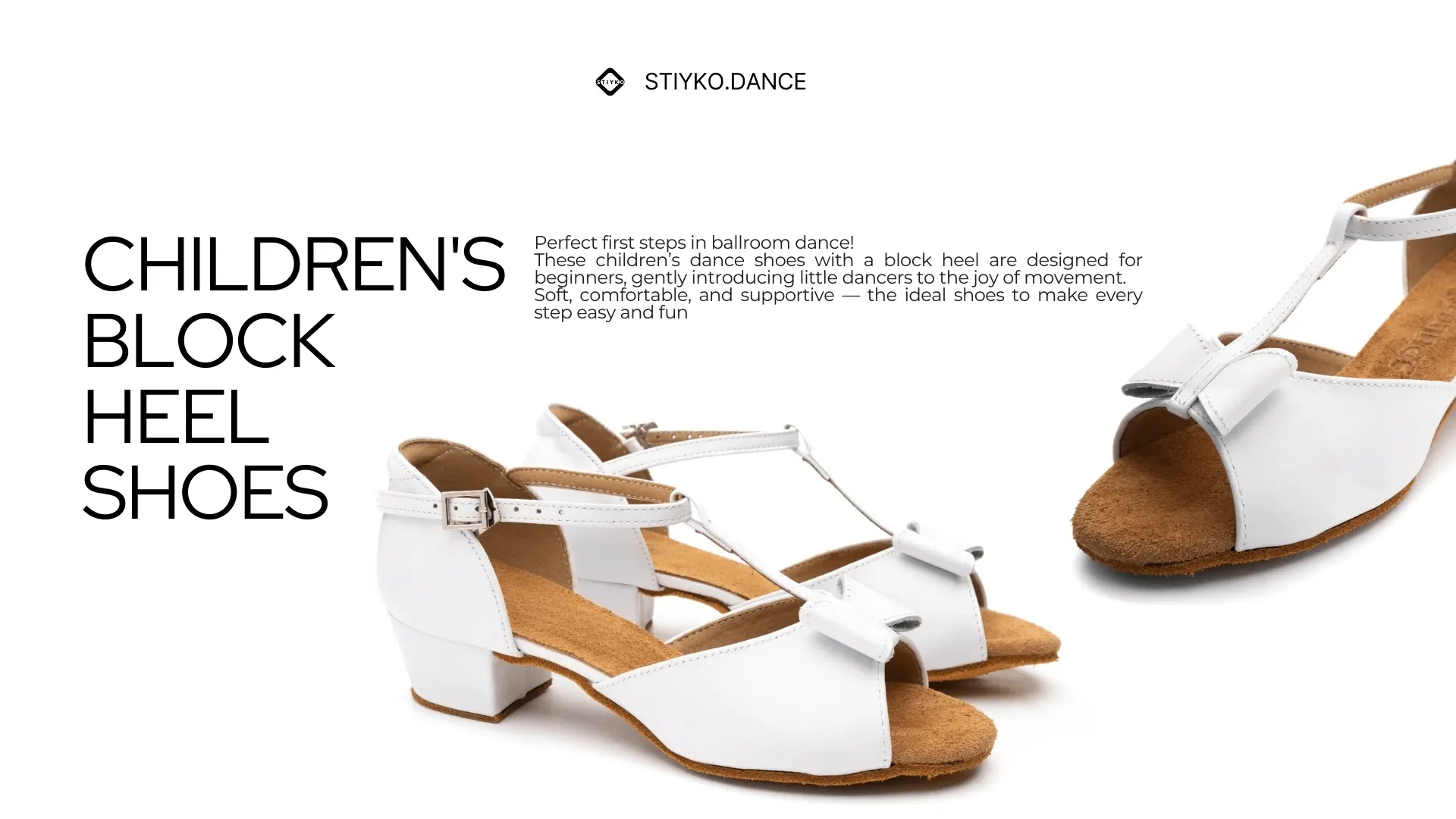
This guide covers what a child actually needs, when they need it, and how to size a foot that will be bigger by spring. Our children's dance shoes are mostly natural leather with a suede sole, built for exactly this stage.
When Does a Child Need Real Dance Shoes?
For the first few weeks, soft ballet shoes are fine. Almost every club starts children that way, and there is no reason to spend money before you know the child will stay.
Real dance shoes become necessary when one of three things happens: the child starts attending twice a week or more, the first showcase or competition is announced, or the teacher asks for them. The practical sign is on the floor — a child who slides on turns, or whose foot slides inside the shoe, cannot learn footwork correctly. A suede sole and a fixed heel are what make a turn controllable.
What Girls and Boys Wear
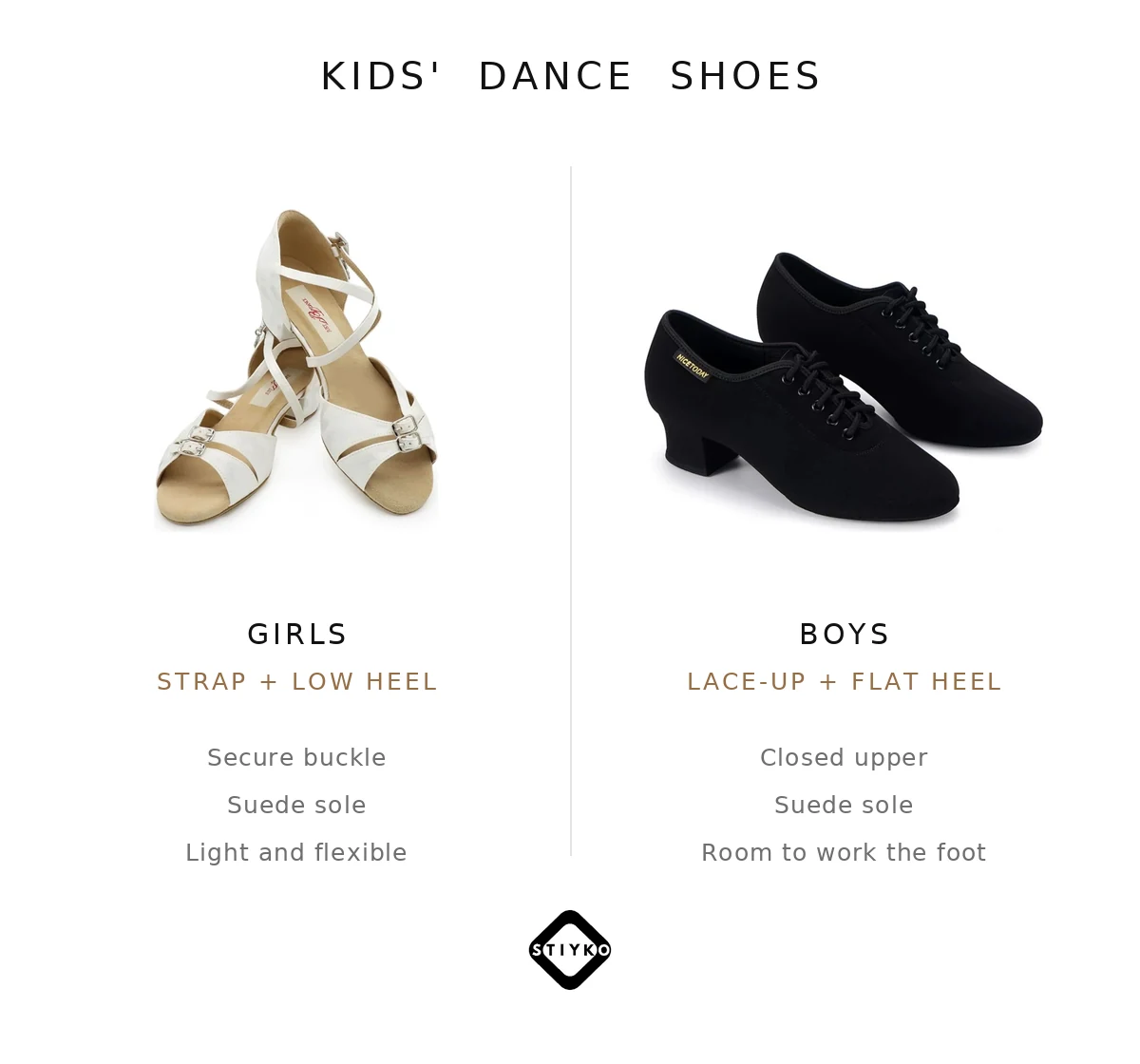
Girls' models are closed or strap shoes with a secure buckle and a low heel. The strap is not decoration: it holds the foot on the shoe through spins, and a child's foot is narrower and more mobile than an adult's.
Boys' models are closed lace-ups with a flat or very low heel. They look like small dress shoes, but the sole is suede and the construction is flexible — ordinary school shoes are not a substitute, because a rubber sole grips the floor and a rigid sole stops the foot working. Both share the thing that matters most: a suede sole that slides in a controlled way instead of sticking.
Sizing a Growing Foot: Never Buy a Size Up
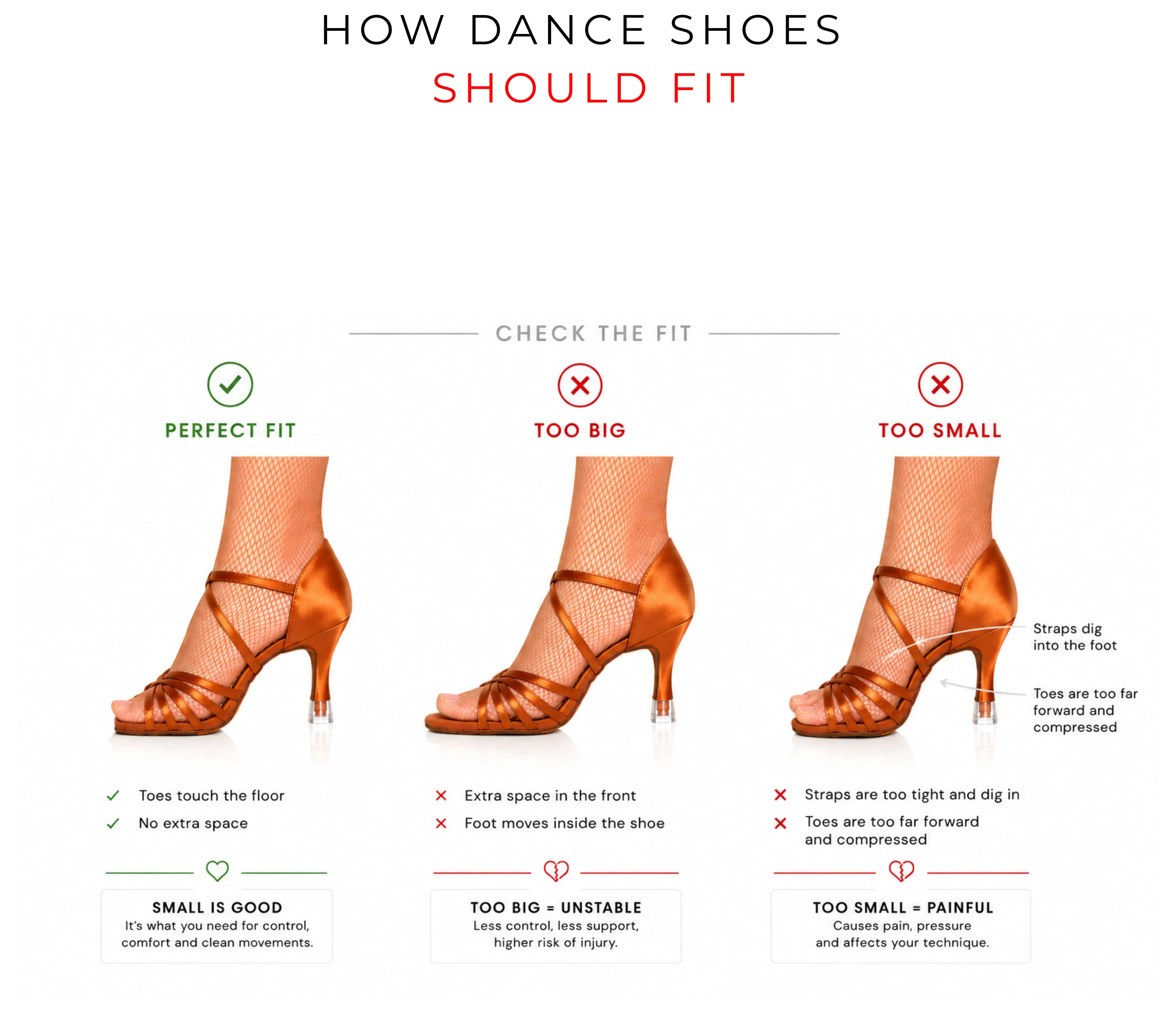
This is the section to read twice. A dance shoe bought “with room to grow” is not generous — it is a foot sliding around inside a shoe. That means blisters, no control on turns, technique built on a wobble, and a genuine risk of the ankle rolling.
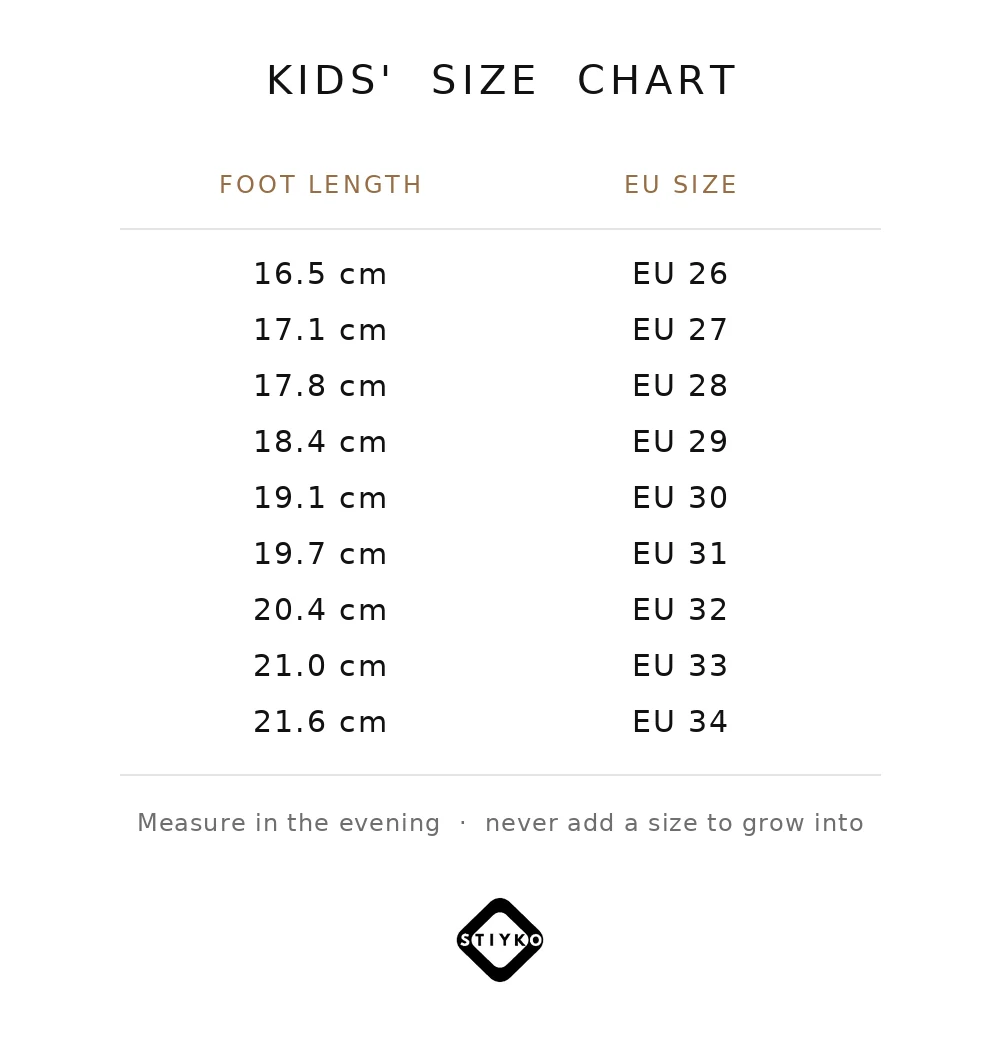
Buy the size that fits now: snug, with the toes reaching the edge of the insole and no sliding at the heel. Measure the foot in centimetres rather than guessing from a street size — our guide on how to measure your foot for the right dance shoe size shows the ruler-and-paper method, and it works exactly the same for children.
How Often Will You Be Replacing Them?
Plan for it. A school-age foot commonly gains half a size or more across a season, and children under-report tightness — they will keep dancing in shoes that hurt rather than lose the pair they like.
So do not ask; measure. Take the foot length at the start of each term and compare it with the last figure. When the toes reach the very end of the insole with no space at all, the pair is finished, however good it looks.
What to Look For in a Child's Shoe
- A secure strap and buckle, or proper laces — nothing that loosens during a routine.
- A flexible suede sole that lets the foot point and roll.
- Light weight; a heavy shoe teaches a child to stamp.
- A snug heel cup that holds the foot without pinching.
- Natural leather uppers, which mould to the foot as the child wears them.
- A simple design that survives daily class, not just the photo on stage.
Heels for Children
Start flat or very low. Height is added gradually, as the child grows and as their competition class requires it — not because a higher heel looks more serious. Young ankles on a high heel produce exactly what you would expect: poor balance, a tired child, and an avoidable injury.
Ask the teacher what the club expects at your child's level before buying anything with a heel, and read our heel height and shape guide if you want the reasoning behind each height.
One Pair or Two?
Children usually outgrow dance shoes before they wear them out, so one good pair is often enough. Once a child trains three or more times a week, or competes seriously, a separate training pair still pays for itself — it keeps the competition pair clean and unstretched for the floor. The full argument is in our guide on practice shoes versus performance shoes.
Making a Child's Pair Last
Two rules cover most of it: never outdoors, and brush the sole. A single walk to the car on asphalt does more damage to a suede sole than a month of classes. Everything else — drying after training, cleaning leather, storing the pair properly — is in our dance shoe care and break-in guide.
Buying Kids' Dance Shoes Online
Measure both feet in the evening, when they are at their largest, and go by the larger one. Trace the foot on paper, note the length in centimetres, and send us that with the child's age and how often they train. We will tell you which models fit and which size to take — and we ship across Ukraine and internationally.
Frequently Asked Questions
What size dance shoes should I buy for my child?
The size that fits today. Measure the foot in centimetres and match it to the chart; never add a size “to grow into”. A loose dance shoe is a safety problem, not a saving.
Can my child wear soft ballet shoes to a ballroom class?
For the first weeks, yes — most clubs start that way. Once they train regularly or perform, they need a suede sole and a fixed heel to learn turns properly.
At what age can a child wear a heel?
There is no fixed age — it depends on the child's level and what their club requires. Start flat, add height gradually, and ask the teacher before buying.
How do I know they have outgrown the pair?
Measure, do not ask. When the toes reach the very end of the insole with no room, or the child starts curling their toes, the pair is done.
Are second-hand children's dance shoes a good idea?
Only with a careful look first: a used shoe has moulded to another child's foot, and the sole and heel may be well into their life. Our safety checklist shows what to inspect.
Do boys and girls need different shoes?
Yes. Girls wear strap or closed models with a low heel; boys wear closed lace-ups with a flat or very low heel. Both need a suede sole.